Google Discover Ads: Do They Get You In Forever?
Running ads on Google Discover won't guarantee lasting organic placement. Here's what actually keeps your site showing up in Discover.
AI Summary
Running ads on Google Discover won't guarantee lasting organic placement. Here's what actually keeps your site showing up in Discover.
If you have ever seen your business ad pop up in someone’s Google Discover feed and thought “great, now I’m in Discover for good,” you are not alone. It’s one of the most common misunderstandings we hear from business owners at F9XR Team, and honestly, it makes sense on the surface. You paid for visibility, Google showed your content, so shouldn’t that visibility stick around?
The short answer is no. Running ads on Google Discover does not get your website into the organic Discover feed permanently, or even temporarily in most cases. Paid placement and organic placement in Discover are two completely different systems, and mixing them up can lead to wasted ad budget and unrealistic expectations about long-term traffic.
In this article, we will break down exactly how Google Discover works, what ads actually do (and don’t do) for your Discover presence, what really earns you a spot in the organic feed, and how small business owners and startups can build a sustainable strategy instead of chasing shortcuts that don’t exist.
What Is Google Discover, Really?
Google Discover is a personalized content feed that shows up on the Google app, the mobile browser homepage, and sometimes on desktop. Unlike Google Search, where people type in a query, Discover works without any search input at all. Google uses a person’s browsing history, app activity, location, and interests to predict what content they might want to see next.
For businesses, this makes Discover incredibly valuable. A single article or product page that lands in someone’s Discover feed can bring in a wave of traffic without the person ever searching your brand name. Many publishers and ecommerce sites report Discover traffic spikes that outperform their regular organic search numbers, especially around trending topics.
But here’s the catch: Discover’s organic feed is powered entirely by Google’s algorithm, not by advertising spend. There is no “buy your way in” option for the organic feed.
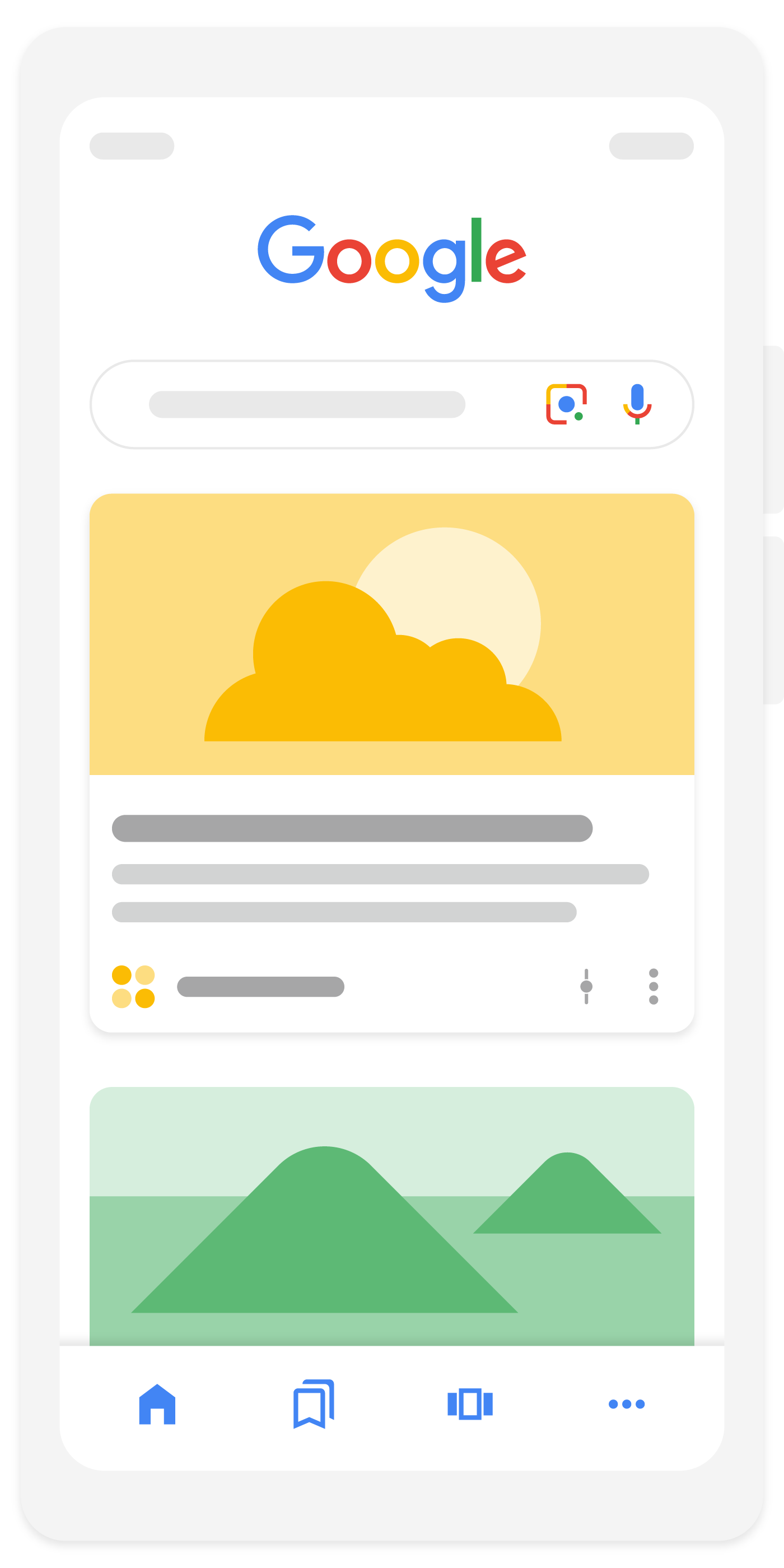
Below is how the Discover surface actually renders on a phone, a stream of image-led cards with no search box and no query. When one of your posts lands here, it is because Google’s algorithm decided the content was worth showing this specific person, not because anyone paid for the slot.
How the Organic Discover Feed Actually Works
Google’s own Discover guidelines point to a few core ranking-style signals for eligibility:
- E-E-A-T (Experience, Expertise, Authoritativeness, Trustworthiness) of your content and site, which Google’s own quality rater guidance spells out in detail
- High-quality images, ideally at least 1200 pixels wide per Google’s image best practices, since visuals are a major factor in what gets picked up
- Content freshness and relevance to current interests or trends
- Mobile-friendliness and page experience, including fast loading times
- Structured data and clear headlines that are not clickbait
None of these signals are influenced by whether you are running a Google Ads campaign.
What Google Discover Ads Actually Are
Google Ads has a placement option called Discover ads (sometimes bundled under Demand Gen campaigns) that lets advertisers pay to have their content shown inside the Discover feed, alongside organic Discover cards. Visually, these ads can look similar to organic Discover content, which is exactly why so many business owners assume the two are connected.
Google’s own product introduction explains what Demand Gen is built for, attracting customers while they browse, rather than when they search. It’s a discovery and awareness play, not a search-ranking lever:
Here’s what Discover ads actually do:
- Place your ad creative in front of users based on their interests and behavior, using Google’s Demand Gen targeting
- Charge you per click or per impression, just like any other paid campaign
- Stop showing your content the moment your budget runs out or the campaign ends
Here’s what Discover ads do not do:
- They do not train Google’s algorithm to organically surface your site in Discover
- They do not build any lasting authority signal for your domain
- They do not carry over into free, unpaid Discover placements once the campaign stops
Think of it the same way you would think about a billboard. Renting a billboard on a busy highway gets you visibility while you’re paying for it. It does not mean the highway authority will now permanently reserve you a spot once you stop paying.
Table: Paid Discover Ads vs Organic Discover Placement
| Factor | Paid Discover Ads | Organic Discover Feed |
|---|---|---|
| Cost | You pay per click/impression | Free |
| Duration | Only while campaign is active | Can last as long as content stays relevant |
| Control | You control targeting and budget | Google’s algorithm decides everything |
| Requirements | Ad account, budget, creative assets | E-E-A-T, quality images, fresh content, mobile UX |
| Long-term traffic | Stops immediately after campaign ends | Can generate ongoing traffic for weeks or months |
| Does it help organic Discover later? | No direct ranking benefit | N/A, this is the organic system itself |
So Why Do People Think Ads Get You Into Discover “Forever”?
A few reasons this myth sticks around:
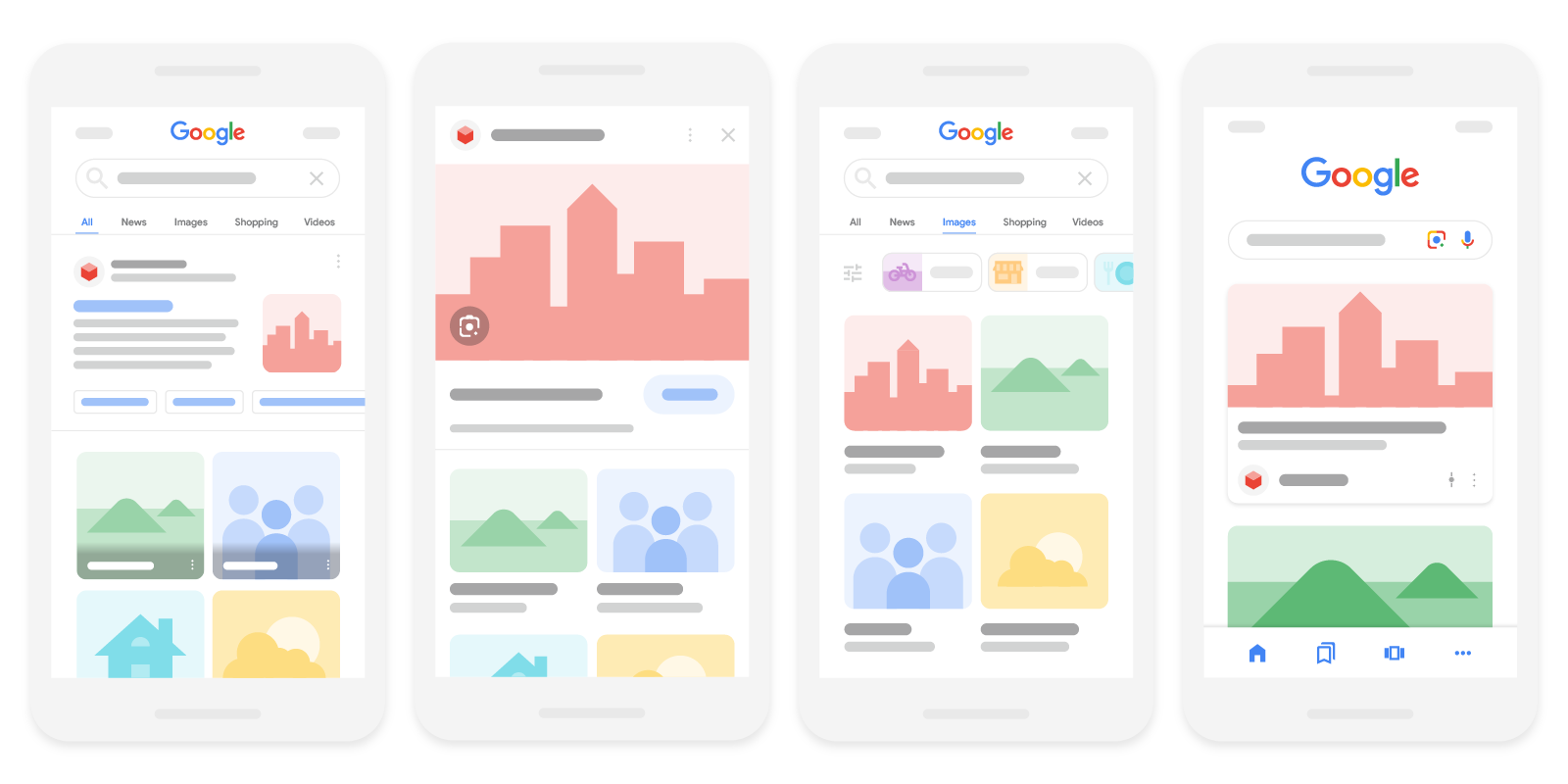
1. Visual similarity. Discover ads and organic Discover cards look almost identical in the feed, aside from a small “Sponsored” or “Ad” label that people often scroll past without noticing. As this example shows, an ad and an organic card can sit side by side and still read the same at a glance:

2. Correlation confusion. Some businesses run a Discover ad campaign around the same time their content starts performing well organically, usually because they also improved their content quality, images, or site speed during that period. They credit the ads when really it was the content improvements.
3. Wishful thinking about paid-to-organic crossover. This same myth exists around Google Search too, where people think running Search ads improves organic rankings. It doesn’t, and Google has confirmed this repeatedly.
What Actually Gets You Into Google Discover Organically
If ads won’t do it, here is what actually improves your odds of showing up in the organic Discover feed.
1. Publish High-Quality, Original Content Consistently
Google favors content that offers a real point of view, useful information, or timely relevance, not thin or recycled content. For local businesses, this could mean blog posts about industry trends, seasonal guides, or answers to questions your customers actually ask. Strong E-E-A-T signals are a large part of what qualifies content for organic placement here. The same quality that earns those signals is what gets your business recommended by AI assistants when people ask for recommendations in tools like ChatGPT or Gemini.
2. Use Large, High-Resolution Images
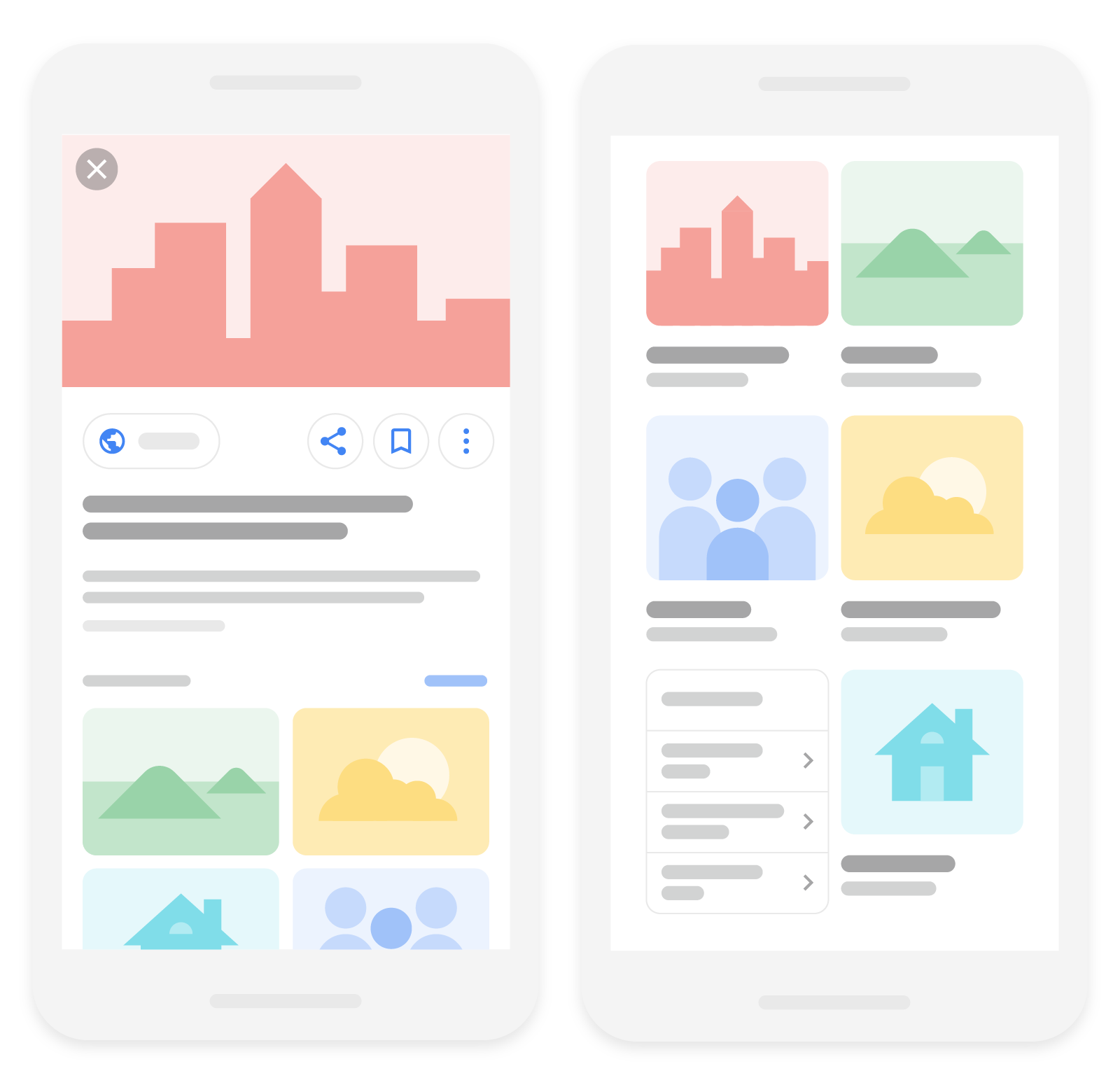
Discover is a visually driven feed. Google recommends images at least 1200 pixels wide with the max-image-preview:large setting enabled in your robots meta tag, otherwise your images may be excluded or shown small. This is how Google renders a well-sized image card in Discover and in image results, big, sharp, and above the fold:
Our complete image SEO audit guide walks through the image signals that matter.
3. Optimize for Mobile and Page Speed
Since Discover lives almost entirely on mobile devices, a slow-loading or poorly formatted mobile site will hurt your chances significantly. Core Web Vitals matter here just as much as they do for regular search. See why going mobile-first is now table stakes for any content strategy.
If your image sizes and file weights are dragging down that mobile experience, this is a practical starting point for cutting load times:
4. Build Topical Authority
Sites that consistently cover a niche well, rather than jumping between unrelated topics, tend to earn more Discover impressions over time. This is where a lot of local businesses and startups miss out, they post inconsistently instead of building a content rhythm around their expertise.
5. Avoid Clickbait Headlines
Google has explicitly stated that exaggerated or misleading headlines can get content excluded from Discover entirely. Write headlines that accurately reflect what the article delivers. Google treats your title and description as the promise the content has to keep, as it illustrates here:
6. Enable Structured Data and Follow Content Policies
Make sure your site follows Google’s Discover content policies (no spam, no misleading claims) and that structured data like Article schema is implemented correctly. Our guide to the essential text files for SEO, AEO, and GEO covers the robots and structured-data basics that keep pages eligible.
Real-World Example
Consider two local businesses selling home decor, both running the exact same Google Discover ad campaign for a month.
Business A has a blog with thin, generic posts and no real content strategy. Once their ad budget runs out, their Discover traffic drops back to zero, because they never had organic Discover presence to begin with.
Business B uses the ad campaign period to also publish two well-researched, image-rich blog posts about “2026 home decor trends” and “how to style a small living room.” Even after the ad campaign ends, Business B continues to see organic Discover traffic on those posts for weeks, not because of the ads, but because the content itself met Discover’s quality bar.
This is the pattern we see repeatedly with clients at F9XR Team: the ad spend didn’t create the lasting traffic, the content strategy did.
Common Mistakes Business Owners Make With Discover Ads
- Assuming a single ad campaign replaces an ongoing content strategy
- Not tracking whether traffic is coming from paid or organic Discover in Google Analytics and Search Console
- Using low-resolution images in ad creative that would never qualify for organic Discover anyway
- Treating Discover ads as an SEO tool instead of a short-term visibility tool
- Ignoring Search Console’s Discover performance report, which is the only reliable way to see actual organic Discover data
How F9XR Team Can Help
F9XR Team works with Chartered Accountants, Company Secretaries, CMAs, startups, and local businesses across India to build a digital presence that doesn’t rely on short-term paid spikes. Our approach includes:
- Building content strategies specifically designed around E-E-A-T and Discover eligibility signals
- Optimizing site speed, mobile experience, and structured data so your existing content has a real shot at organic Discover placement
- Creating high-quality visual assets sized correctly for Discover’s image requirements
- Setting up proper tracking so you can clearly see what is paid traffic versus organic Discover traffic
- Advising on when Discover ads genuinely make sense (product launches, time-sensitive announcements) versus when they are a waste of budget
Our case studies show the kind of content, SEO, and performance work that moves the needle for businesses like yours, and it’s the same discipline that keeps pages eligible for organic Discover.
If you are currently running or considering Google Discover ads and want a strategy that builds lasting organic visibility instead of a one-time spike, that is exactly the kind of work we do.
Key Takeaways
- Google Discover ads and the organic Discover feed are two separate systems, paying for ads does not get you into organic Discover
- Discover ads stop delivering traffic the moment your campaign or budget ends
- Organic Discover placement depends on E-E-A-T, image quality, mobile experience, content freshness, and topical authority
- The “ads help organic Discover” belief usually comes from correlation, not causation
- A sustainable content strategy will always outperform ad spend for long-term Discover visibility
- Use Google Search Console’s Discover report to separate paid results from organic performance
Conclusion
Google Discover ads can be a useful short-term tool for getting eyes on a product launch, an event, or time-sensitive content, but they are not a shortcut to permanent visibility in the organic Discover feed. The two systems simply don’t talk to each other. If lasting Discover traffic is your goal, the real work happens in content quality, image optimization, mobile experience, and consistent publishing, not in the ad budget.
For business owners who want to build that kind of durable, organic digital presence rather than chasing paid spikes, teams like F9XR offer website development, website redesign, local SEO, and full digital presence solutions built around exactly these principles. If you’re ready to stop guessing and start building a strategy that actually compounds over time, that’s a conversation worth having.
Produced using AI-assisted research and drafting workflows, then reviewed and edited by the F9XR editorial team. See our Editorial Policy for how we create and verify content.
Further Reading
Related Questions

Keywords
Copyright
© 2026 F9XR Team. Licensed under the Creative Commons Attribution 4.0 International License (CC BY 4.0). You are free to share and adapt this work with attribution to the F9XR Team.
Disclaimer
This article reflects the experience and opinions of the F9XR Team and is provided for general informational purposes only. It is not professional legal, financial, or medical advice. Metrics and results mentioned are illustrative and not guaranteed.
F9XR/Articles, published by the F9XR Team, delivers high-quality marketing content produced by staff and contracted experts, unless otherwise noted. This commitment to quality ensures comprehensive coverage of industry topics from a trusted team of writers. For more information, please visit the F9XR Team website or reach out through the contact page.
Ready to Build a Stronger Digital Presence?
The F9XR Team helps business owners turn websites into conversion engines. From website development and redesign to local SEO and AI-powered visibility, we engineer systems that bring in results, not just traffic.
Comments