
The 1-Page Google E-E-A-T Checklist Every SEO Should Bookmark
A one-page E-E-A-T checklist for Experience, Expertise, Authoritativeness, and Trustworthiness. Run it before you publish any page in 2026.

AI Summary
A one-page E-E-A-T checklist for Experience, Expertise, Authoritativeness, and Trustworthiness. Run it before you publish any page in 2026.
E-E-A-T is the framework Google’s human quality raters use to judge whether a page deserves to rank. There’s no toggle and no score to optimize; the signals just get stronger with every core update. In 2026 those same signals increasingly decide whether AI Overviews, ChatGPT, and Perplexity cite a page at all. This is the condensed, scannable version: one page, four pillars. Bookmark it, and run it against any page before you publish.
What E-E-A-T Actually Stands For
E-E-A-T stands for Experience, Expertise, Authoritativeness, and Trustworthiness.
- Experience: Does the author or site show firsthand, lived involvement with the topic, not just research?
- Expertise: Does the content demonstrate real knowledge, skill, or credentials in the subject?
- Authoritativeness: Is the author or site recognized as a credible source by others in the field, not just by itself?
- Trustworthiness: Is the information accurate, clearly sourced, and safe to act on?
Google’s own framing treats trust as the center of gravity. Expertise, experience, and authority all feed into it, and if trust collapses, the other three don’t save the page. Google added Experience to the original E-A-T framework in December 2022, in an update to its Search Quality Evaluator Guidelines, reflecting how much weight firsthand involvement now carries next to pure credentials.
The 1-Page E-E-A-T Checklist
✅ Experience
- Author has visible, verifiable firsthand involvement with the topic (used the product, ran the process, lived the experience)
- Original photos, screenshots, or video, not stock imagery, where firsthand proof is plausible
- Specific, non-generic details that couldn’t be written from research alone (exact numbers, timelines, edge cases encountered)
- First-person language used honestly, not as a formatting trick
✅ Expertise
- Author bio states relevant credentials, role, or track record on this specific topic
- Content explains why, not just what. Reasoning is shown, not asserted
- Claims are accurate and hold up against current authoritative sources, not outdated consensus
- For YMYL topics (health, finance, legal, safety), the author’s qualification for the subject is explicit, not implied
✅ Authoritativeness
- Site or author is referenced, linked to, or cited by other credible sources in the niche
- Author has a dedicated bio or profile page, not just a byline
- Structured author and entity data is present (Person schema, sameAs links to verified profiles)
- Content sits inside a coherent topical cluster, not as an isolated one-off page with no supporting context
✅ Trustworthiness
- Factual claims align with current, verifiable consensus, not stale or contradicted data
- Sources are cited clearly, with links to where the numbers came from
- Publish and last-updated dates are visible and accurate
- Clear ownership: who runs the site, who wrote the page, how to contact them
- No dark patterns, no misleading claims, hidden affiliate motives, or deceptive formatting
- Site is secure (HTTPS) with no intrusive, trust-eroding ad experience

Why E-E-A-T Matters More in 2026, Not Less
The framework is nearly a decade old, but its weight has grown as AI-generated and AI-paraphrased content has flooded search results. Recent search-industry analysis found that sites publishing original data gained visibility after the March 2026 Google core update, while AI-paraphrased content lost the large majority of its traffic in the same period. That gap didn’t exist when most competing content was human-written by default. The signal that used to separate good SEO from bad SEO is now the signal that separates real expertise from content laundering. For a deeper look at building those trust signals across your entire site, see our website trust score guide.
One thing to be precise about: Google doesn’t publish an E-E-A-T score. It’s a rater framework used to train and evaluate the systems, and no single number ever comes out of it. But the underlying signals it describes, author reputation, factual accuracy, content depth, external validation, correlate strongly enough with both rankings and AI Overview citations that you can’t treat it as optional anymore.
For context on how those signals get judged in practice, the official Search Quality Evaluator Guidelines are public, so you can read the exact instructions raters follow. The SEO CodeBase Auditor skill treats E-E-A-T as one of its 24 audit pillars, checking author schema, trust signals, and factual sourcing in the code itself. And if AI Overviews are part of your traffic plan, AI visibility optimization covers the citation side of the same framework.
Quick Gut-Check Before You Publish
If you can only ask one question per pillar, ask these:
| Pillar | One-Line Gut-Check |
|---|---|
| Experience | Could someone tell this was written by someone who actually did the thing? |
| Expertise | Would an expert in the field find anything here inaccurate or shallow? |
| Authoritativeness | If a stranger fact-checked this author, would they find a credible track record? |
| Trustworthiness | If something here turned out to be wrong, is it clear who’s accountable and how to reach them? |
If any answer is no or not sure, that’s the pillar to fix before the page goes live, not after it fails to rank.
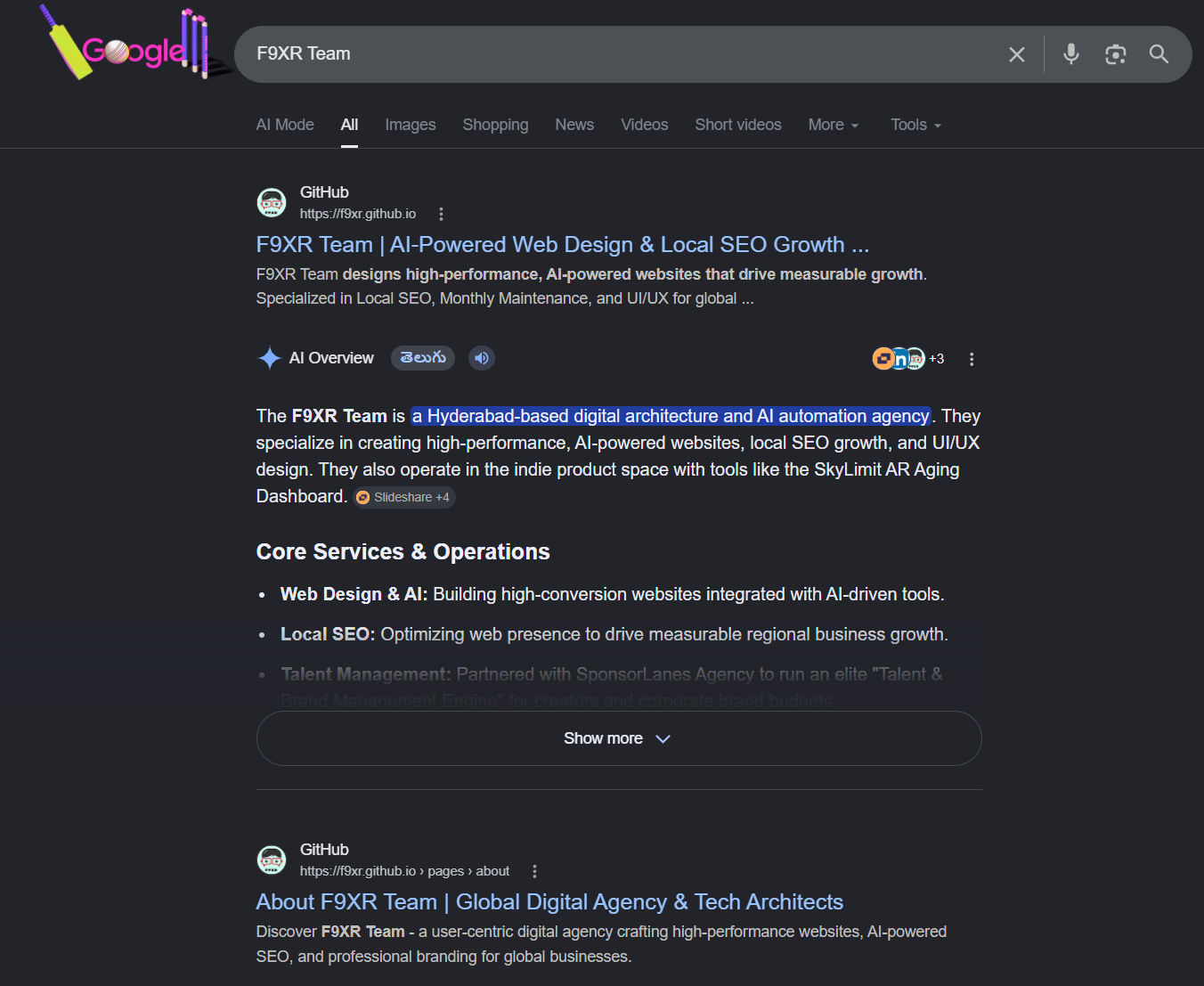
Local businesses have a head start on some of these signals when they build citations and profiles correctly. Our information consistency audit guide explains why NAP consistency feeds the trustworthiness pillar, and our guide to free business directories shows how consistent listings feed the authority and trust side of the checklist, and the F9XR Team introduction walks through a full digital presence approach that bakes these trust signals into the build.
Key Takeaways
- E-E-A-T stands for Experience, Expertise, Authoritativeness, and Trustworthiness, with trust as the center of gravity.
- Google added Experience in December 2022, making firsthand involvement a first-class quality signal.
- There is no E-E-A-T score in the algorithm, but the signals the framework describes map closely to rankings and AI citations.
- Original data gained visibility after the March 2026 core update while AI-paraphrased content lost most of its traffic.
- Run the checklist against every page before publishing, and fix the weakest pillar first.
Conclusion
E-E-A-T won’t hand you a number to chase, but it’s the closest thing SEO has to a content quality floor in 2026. Run the checklist, fix the weakest pillar, and re-check every page you publish. That habit is what separates sites that gain visibility from sites that lose it after each core update.
If you need help implementing this, teams like F9XR specialize in website development, website redesign, local SEO, and digital presence solutions, and they build trust signals into sites from the start.
Sources: Google Search Central Quality Rater Guidelines context via Incremys (2026), Keywords Everywhere E-E-A-T Playbook (2026), SEO Score Tools E-E-A-T Optimization Guide (2026), SEO-Kreativ E-E-A-T Guide with SE Ranking March 2026 core update data (2026).
Further Reading
Related Questions

Keywords
Copyright
© 2026 F9XR Team. Licensed under the Creative Commons Attribution 4.0 International License (CC BY 4.0). You are free to share and adapt this work with attribution to the F9XR Team.
Disclaimer
This article reflects the experience and opinions of the F9XR Team and is provided for general informational purposes only. It is not professional legal, financial, or medical advice. Metrics and results mentioned are illustrative and not guaranteed.
F9XR/Articles, published by the F9XR Team, delivers high-quality marketing content produced by staff and contracted experts, unless otherwise noted. This commitment to quality ensures comprehensive coverage of industry topics from a trusted team of writers. For more information, please visit the F9XR Team website or reach out through the contact page.
Ready to Build a Stronger Digital Presence?
The F9XR Team helps business owners turn websites into conversion engines. From website development and redesign to local SEO and AI-powered visibility, we engineer systems that bring in results, not just traffic.
Comments