
Rank on TikTok & Instagram: The New Search Engine
Gen Z searches TikTok and Instagram before Google. Learn the caption, caption-overlay, and audio framework that gets your business found in-app.
AI Summary
Gen Z searches TikTok and Instagram before Google. Learn the caption, caption-overlay, and audio framework that gets your business found in-app.
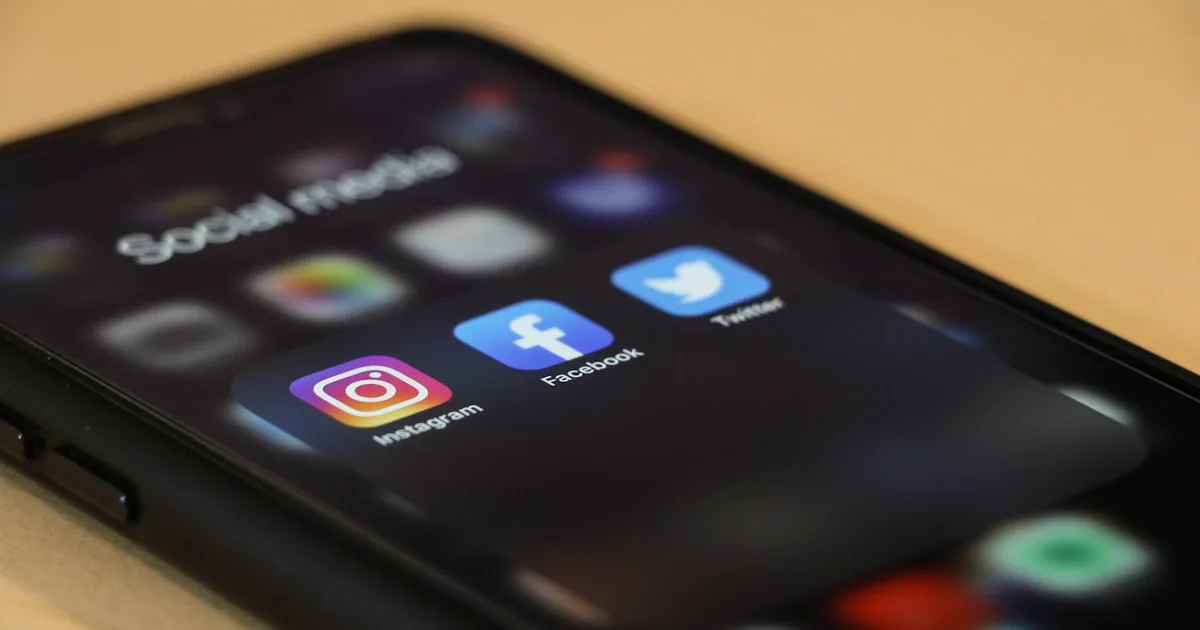
Somewhere in the last two years, the way people search quietly changed. TikTok and Instagram aren’t just social apps anymore. They’re search engines. Prabhakar Raghavan, then Google’s SVP of Knowledge and Information, told Fortune that almost 40% of young people go to TikTok or Instagram to find a place for lunch instead of Google Search or Maps. That number has only grown since.
The result is a second search engine sitting inside every short-form video app. And unlike Google, this one ranks by what the app’s AI can read in your video, not by backlinks. If your business isn’t producing searchable short-form content, you’re invisible to an entire generation of buyers who never open Google at all.
This guide breaks down how TikTok Search and Instagram Search actually work, then gives you a three layer framework (caption SEO, caption overlay SEO, and audio SEO) plus copy-paste templates you can use today.
Why the Big Shift Toward Social Search
The movement from Google to native app search isn’t a small behavior change. For a growing share of people, especially anyone under 30, the search query no longer starts at Google. It starts with an app icon and a text box inside TikTok or Instagram.
That matters for three reasons.
First, the search intent is already commercial. When someone searches “best croissant in Denver” on TikTok, they’re usually closer to buying than someone typing the same phrase into Google. They’ve opened a specific app, typed a specific query, and they expect a specific, visual answer.
Second, the ranking factors are completely different. Google ranks content with backlinks, site authority, and technical health. TikTok ranks videos with on-screen text, watch time, saves, shares, and engagement velocity. The two systems barely overlap, so a site that ranks #1 on Google can be completely absent from TikTok search.
Third, native app search is compounding. Every video you publish becomes a searchable result that feeds the algorithm, which serves more of your videos to people who matched your content before. It’s the same compounding logic as SEO, but it lives inside an app you probably weren’t treating as a search engine.
Google itself noticed. The company spent years pushing Shorts, its YouTube answer to TikTok, and has steadily woven video results into standard search pages. For businesses, that’s the clearest signal that short-form video now is search.
How TikTok Search and Instagram Search Work
Behind the scenes, TikTok and Instagram both run what amounts to a video search engine. Here’s what the apps actually index.
Captions. The text you type below your video is indexed and matched against search queries, the same way page text is indexed by Google.
On-screen text. Text overlaid on the video itself is read using optical character recognition (OCR). The app turns that visual text into searchable content.
Audio and voiceover. Spoken words in your video are transcribed into text and indexed. This is why trending audio can surface your video even when the caption is generic.
Hashtags. Hashtags are searchable, but they’re a weaker signal than the caption, overlay, or audio transcript.
Engagement. Views, watch time, saves, shares, comments, and how quickly those signals arrive tell the algorithm whether a result actually satisfied the searcher.
Put those together and the formula is simple: a video with a keyword-rich caption, a clear overlay, and a matching voiceover gives the algorithm three times more text to match, plus a pile of engagement signals proving people wanted it.
There’s a practical difference between the two apps worth knowing. On TikTok, the search results tab surfaces video results directly, and the For You feed also mixes in content that matched your search history. On Instagram, search happens through both Explore and the keyword search bar described in the Instagram Help Center, and Reels results blend ranked videos with accounts and posts. That means your optimization needs to cover two experiences on Instagram: the keyword bar where people type, and the Explore surface where the algorithm guesses what they’d watch next. The three layer framework below feeds both, because every layer is readable text the ranking system can match.
The technical term for all of this is native app search optimization. It sits alongside answer engine optimization as the two biggest growth areas in local visibility, and we’ve covered the Search Everywhere Optimization framework in a companion guide on YouTube and Google.
The 3-Layer Optimization Framework
Every searchable TikTok or Instagram post should be built on three text layers. Miss one and you’re giving the algorithm a fraction of the information it could use to rank you.
Layer 1: Caption SEO, the On-Screen Text
The caption is your title tag and meta description rolled into one. It’s the first thing the algorithm indexes and the first thing a human reads.
Treat the caption like a short landing page:
- Open with the primary keyword phrase in the first sentence.
- Answer the search intent explicitly: who, what, where, and why should the viewer watch.
- Add 2 to 5 relevant hashtags at the end.
- Close with a clear call to action (save, follow, or visit your website).
What you shouldn’t do: write a vague caption like “Great food today #food.” That caption contains almost nothing for the algorithm to match. A strong caption says what the video shows, names the place, and states the category.
Layer 2: Caption Overlay SEO, the Text on the Video
On-screen text gets read by the app’s OCR and it holds attention for the first few seconds, which is the highest-leverage part of any short video.
The overlay should do three things:
- State the keyword or hook immediately, so both the algorithm and a scrolling viewer know what this video is about.
- Confirm the message that the voiceover is saying, so the transcript and the overlay reinforce each other.
- Repeat the key phrase once, naturally. Repetition inside the video matters more than repetition in the caption.
A common mistake is designing overlays as pure decoration. An overlay that just says “Watch this!” adds nothing to the search index. An overlay that says “Best Sourdough Pizza in San Diego” adds a keyword to your transcript and tells the viewer exactly what they’re getting.
Layer 3: Audio SEO, the Sound Behind the Video
The words your voiceover or on-screen speaker says are transcribed and indexed. This is the most underused layer, because most businesses post silent montages set to trending audio, which contributes zero searchable text.
Two options fix it:
- Record a real voiceover that names your business, your city, and your category. “We’re Bella’s Bakery in Austin, and today we’re making the city’s best sourdough.”
- If you use trending audio, add a strong caption and overlay that cover the searchable text instead. Just don’t leave all three layers empty.
Trending audio still helps because the app recognizes the sound and can match users who’ve interacted with that audio before. But it works best when paired with layers one and two. The TikTok Creative Center is the best free place to check which sounds and search trends are rising in your niche before you film.
The Copy-Paste Caption Template
Use this structure for every business video. Swap in your keywords, business name, and city.
[Hook sentence with primary keyword].
[Second sentence that confirms the benefit or answers the question].

Here's what you'll see in this video: [one line summary].

📍 [Business name], [City] | [Neighborhood or address]
[One sentence about the business, hours, or offer]

#primarykeyword #citykeyword #secondarykeyword
Example for a coffee shop in Denver:
The best cold brew in Denver, made in under a minute.
Here's the exact drink our customers order every morning.

Watch how we pull it, then come try it this week.

📍 Mountain Pour Coffee, RiNo | 21st and Larimer
Open daily 7am to 3pm, indoor and patio seating

#coldbrew #denvercoffee #coffeeshop
The Copy-Paste Caption Overlay Template
Keep the on-screen text short. The overlay is scanned by OCR and read in seconds, so every word must earn its place.
Line 1: [Primary keyword or hook, 3-6 words]
Line 2: [The specific thing this video shows, 4-8 words]
Line 3: [One credibility line: years, reviews, or "local favorite"]
Example:
Best Cold Brew in Denver
Pulled in 60 seconds
420+ five-star reviews
The Copy-Paste Voiceover Script Template
A 20 to 30 second voiceover that names your business, city, and category will be transcribed into searchable text and build instant local trust.
"We're [business name] in [city], and today we're showing you [exact thing].
This is [name of product or service], and it's why [specific reason locals pick us].
Come find us at [location or address], or [call to action]."
Example:
"We're Mountain Pour Coffee in Denver, and today we're showing you our cold brew.
This is the drink our customers order every single morning.
Come find us in RiNo at 21st and Larimer, or follow us for tomorrow's special."
Real-World Example: Search Scenario for a Local Restaurant
Follow one customer through the system. A tourist lands in Austin, opens TikTok, and types “best tacos in Austin.” The results page shows a mix of videos. The ones that rank first share three things: a caption that says “best tacos in Austin,” an overlay that repeats it, and a voiceover that names the restaurant and the dish.
The restaurant that posted a searchable video with all three layers wins that customer. The restaurant that posted a silent video of sizzling meat with the caption “taco night 🌮” doesn’t appear at all, even though its tacos may be better.
That’s the entire opportunity in one example. Local SEO gets you on Google Maps. Native app search gets you in front of the people who skipped Google entirely.
How F9XR Team Handles Social Search Optimization for Business Websites
- Every short-form video plan we build starts with keyword research: what customers actually type into TikTok and Instagram search, then we write captions, overlays, and scripts around those exact phrases.
- We apply the same three layer framework (caption, overlay, audio) across TikTok, Instagram Reels, and YouTube Shorts, so every piece of content is searchable everywhere it lives.
- Videos are linked back to website development and website redesign, website rentals, and AI visibility optimization pages so the content drives visitors to a place they can convert.
- We treat social search as a compounding asset: every new video adds to the searchable library the app keeps matching to new customers, exactly like publishing pages builds a site’s topical authority.
Key Takeaways
- Almost 40% of young people use TikTok or Instagram to search instead of Google, and that share has grown since Google’s own executive said it in 2022.
- TikTok and Instagram index captions, on-screen text, audio transcripts, and hashtags, so every video is a searchable landing page.
- A three layer framework (caption, overlay, audio) gives the algorithm three times more text to match against a user’s query.
- Native app search ranks on engagement and on-screen text, not backlinks, so it rewards a completely different skill than traditional SEO.
- Auto-generated closed captions should stay on, because they feed the app the exact words of your audio as searchable text.
- Short-form video search is now a local business channel with compounding returns, and it runs in parallel with Google, not instead of it.
Conclusion
Search is no longer one box on one search engine. It’s a YouTube transcript, an AI answer, a Maps listing, and a TikTok caption, all fighting for the same customer. Businesses that treat every platform as a search engine win the customers other businesses never reach.
Start with the smallest version of this: one searchable video a week, using the caption, overlay, and voiceover templates above. That’s a library of search results after a month and a compounding asset after a year.
If building out a full multi-platform search strategy alongside your actual business sounds like a lot, that’s exactly the groundwork teams like F9XR build into website development and redesign, alongside local SEO, website rentals, and AI visibility optimization. Or reach out and we’ll map the channels your customers actually search first.
Further Reading
Related Questions

Keywords
Copyright
© 2026 F9XR Team. Licensed under the Creative Commons Attribution 4.0 International License (CC BY 4.0). You are free to share and adapt this work with attribution to the F9XR Team.
Disclaimer
This article reflects the experience and opinions of the F9XR Team and is provided for general informational purposes only. It is not professional legal, financial, or medical advice. Metrics and results mentioned are illustrative and not guaranteed.
F9XR/Articles, published by the F9XR Team, delivers high-quality marketing content produced by staff and contracted experts, unless otherwise noted. This commitment to quality ensures comprehensive coverage of industry topics from a trusted team of writers. For more information, please visit the F9XR Team website or reach out through the contact page.
Ready to Build a Stronger Digital Presence?
The F9XR Team helps business owners turn websites into conversion engines. From website development and redesign to local SEO and AI-powered visibility, we engineer systems that bring in results, not just traffic.
Comments