
Chand Baori: Rajasthan's Ancient Stepwell Marvel
Explore Chand Baori, one of India'sdeepest stepwells in Abhaneri, Rajasthan. History, architecture, visiting tips, and why it still amazes travelers.
TL;DR — At a glance
Explore Chand Baori, one of India's deepest stepwells in Abhaneri, Rajasthan. History, architecture, visiting tips, and why it still amazes travelers.
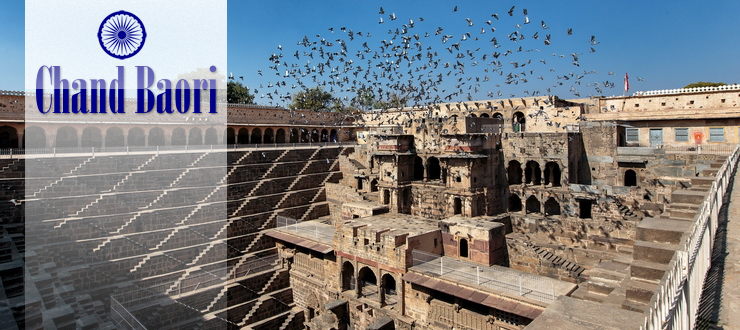
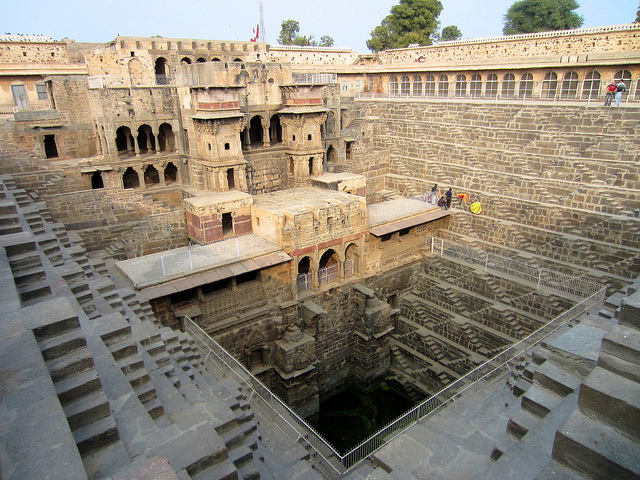
Picture a structure built more than a thousand years ago, with over 3,500 narrow steps arranged in perfect geometric symmetry, descending 13 stories into the earth. No cement, no modern machinery, just precise engineering and an understanding of water conservation that feels almost ahead of its time. That’s Chand Baori, one of India’s most striking architectural achievements, tucked away in the small village of Abhaneri in Rajasthan.
Most people who see photos of Chand Baori for the first time assume it’s been digitally altered. The dizzying pattern of steps, repeated in flawless symmetry on three sides, looks more like an optical illusion than something built by hand in the 8th or 9th century. Yet it’s very real, and it’s one of the best surviving examples of how ancient Indian communities solved a very practical problem: how to store and access water in a region where it was scarce for most of the year.
This guide covers everything worth knowing about Chand Baori, its history, architecture, and why it’s earned a spot on so many travel bucket lists in recent years, along with practical visiting information and insights that are useful whether you’re a curious traveler, a history enthusiast, or a local business owner in the Abhaneri or Jaipur region looking to understand this heritage site’s growing tourism value.
Quick Facts About Chand Baori
| Feature | Details |
|---|---|
| Location | Abhaneri village, Dausa district, Rajasthan |
| Built | Estimated 8th to 9th century CE |
| Built By | King Chanda of the Nikumbha dynasty |
| Depth | Approximately 30 meters (about 100 feet) |
| Number of Steps | Around 3,500 steps across 13 levels |
| Structure Type | Stepwell (Baori/Baoli) |
| Nearest City | Jaipur, about 95 km away |
| Best Time to Visit | October to March |
| Entry Fee | Nominal fee for Indian and foreign nationals (varies, check current ASI rates) |
| Managed By | Archaeological Survey of India (ASI) |
What Exactly Is a Stepwell, and Why Does Chand Baori Matter?
Stepwells, known locally as baoris or baolis, were a practical response to a genuine problem across arid parts of India, especially Rajasthan and Gujarat. Groundwater levels would drop significantly during dry months, so communities built deep wells with stepped sides, allowing people to walk down to whatever water level was available rather than relying solely on ropes and buckets.
Chand Baori stands out because of its scale and precision. Unlike simpler wells, it was designed as both a functional water source and a community gathering space, cool even during Rajasthan’s punishing summers thanks to the temperature difference between the surface and the deeper levels. Historians estimate the temperature at the bottom can be several degrees cooler than at ground level, which made it a practical retreat during hot afternoons, not just a water source.
It’s also one of the largest and deepest stepwells in India, which is part of why it draws so much attention from architects, historians, and photographers from around the world.
The Story Behind Its Construction
Chand Baori is believed to have been commissioned by King Chanda, a ruler from the Nikumbha dynasty, sometime between the 8th and 9th centuries. The well was built adjacent to a temple dedicated to Harshat Mata, the goddess of joy and happiness, and the two structures together formed an important religious and social center for the region.
Over centuries, parts of the surrounding complex were modified, including additions during later periods that introduced pavilions and rooms along one side of the well, believed to have been used by royal family members. This blend of utilitarian design and architectural ornamentation is part of what makes Chand Baori historically significant beyond just its size. For a deeper dive into the archaeological record, see the Wikipedia article on Chand Baori.
The Architecture That Makes Chand Baori Famous
Geometric Precision Without Modern Tools
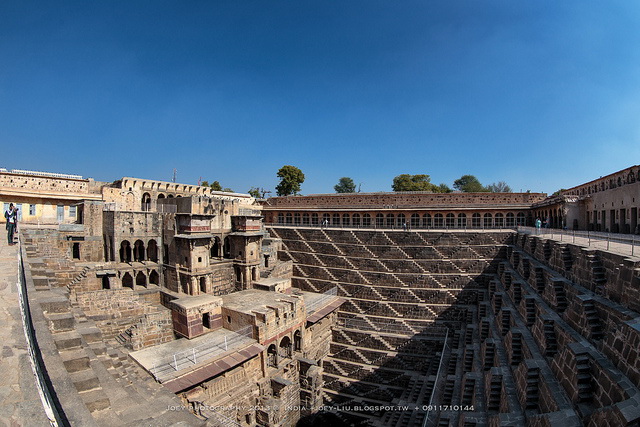
What continues to amaze engineers and architects today is that Chand Baori’s stepped walls were constructed with such mathematical precision using tools and techniques available more than a thousand years ago. The steps form a repeating zigzag pattern on three sides of the well, creating a visual effect that shifts depending on the angle and time of day.

The Fourth Side
Unlike the other three sides, the fourth side of Chand Baori features a multi-story structure with covered verandas, chambers, and carved pillars. This section was reportedly used as a resting place for royalty and offered a shaded, more comfortable space compared to the exposed stepped sides.
Symbolism and Design Philosophy
Some historians and architects have pointed out that the well’s design reflects deeper cultural ideas about descending into the earth as a symbolic journey, connecting the physical act of reaching water with spiritual or reflective practices common in ancient Indian architecture. Whether or not that symbolism was intentional, it adds another layer of interest for visitors and researchers studying vernacular Indian architecture.
Why Chand Baori Has Become a Global Attraction
While Chand Baori has existed for over a thousand years, its popularity as a tourist destination has grown significantly in the last two decades, partly due to its appearance in international films and increased visibility on social media and travel photography platforms. Its dramatic, almost surreal geometry photographs exceptionally well, which has made it a favorite subject for architecture photographers and travel influencers.
This surge in visibility has had a real economic impact on the surrounding region. Abhaneri, once a relatively quiet village, now sees a steady flow of domestic and international visitors, creating opportunities for local guides, small vendors, homestays, and transport operators.
A Few Notable Points
- Chand Baori is considered one of the largest stepwells in the world by depth and step count.
- It’s protected and maintained by the Archaeological Survey of India, which limits public access to the lower steps for preservation and safety reasons.
- The site is often mentioned alongside other famous Rajasthan stepwells like Rani ki Vav in Gujarat, though Chand Baori predates many of its well-known counterparts.
Best Time to Visit Chand Baori
October to March (Recommended)
This is the most comfortable period to visit, with cooler daytime temperatures making it easier to explore the site and the surrounding village without the intense heat Rajasthan is known for.
April to June (Summer)
Temperatures can climb well above 40°C in this region during peak summer, so visits during these months should be planned for early morning to avoid the harshest heat.
July to September (Monsoon)
Rainfall can add a different visual character to the site, though travel logistics in rural Rajasthan can be less predictable during this period.
How to Reach Chand Baori
By Air: The nearest airport is Jaipur International Airport, roughly 95 km from Abhaneri.
By Rail: Jaipur Junction is the closest major railway station, well connected to most parts of the country.
By Road: Chand Baori is often visited as part of a day trip from Jaipur, combined with nearby attractions like Abhaneri’s Harshat Mata Temple. The drive typically takes around 2 hours depending on traffic and road conditions.
For the latest visitor updates and official details, see the official Chand Baori website, or view the site’s exact location on a map.
Looking for more heritage stops near Jaipur or across India? Search every gem we’ve covered or browse the full daily archive.
Practical Tips for Visitors
- Visit early in the day. Mornings offer softer light for photography and cooler temperatures for walking around the site.
- Hire a local guide if possible. Much of the well’s history isn’t fully covered on standard signage, and a knowledgeable guide can add real depth to the visit.
- Respect the barriers. Public access to the stepwell itself is restricted to the upper viewing areas for safety and preservation, so avoid attempting to go past marked boundaries.
- Combine it with nearby sites. Pairing Chand Baori with the Harshat Mata Temple and other nearby heritage stops makes for a more complete day trip from Jaipur.
- Carry water and sun protection. Even in cooler months, the open courtyard area offers little shade during midday hours.
What This Means for Local Businesses and Entrepreneurs
Heritage tourism sites like Chand Baori don’t just benefit large travel companies. They create real, tangible opportunities for small and local businesses, homestays, tour guides, artisans selling local crafts, and transport services operating in and around Abhaneri and the broader Dausa district.
As more travelers plan trips using search engines and AI-powered travel assistants, the businesses that show up in those results are often the ones that get booked. This makes a strong, accurate online presence genuinely important, not just a nice-to-have.
Actionable Steps for Local Businesses Near Heritage Sites
- Keep your Google Business Profile current. Accurate hours, updated photos, and correct contact information matter more than people realize, especially for travelers making last-minute decisions.
- Use specific, relevant keywords. Phrases like “Chand Baori guide,” “Abhaneri homestay,” or “Jaipur day trip stepwell” reflect how real travelers search.
- Encourage and respond to reviews. Reviews influence both traveler decisions and how AI search tools evaluate and summarize business credibility.
- Build a simple, fast, mobile-friendly website. Many travelers research and book on their phones while planning trips, sometimes with limited connectivity in rural areas, so speed and simplicity matter.
- Tell your story clearly. Whether you’re a guide, homestay owner, or craft seller, a clear description of what you offer helps both human visitors and AI tools understand and recommend your business accurately.
Key Takeaways
- Chand Baori is one of India’s oldest and deepest stepwells, believed to have been built in the 8th or 9th century by King Chanda.
- The stepwell descends roughly 30 meters with around 3,500 steps arranged in striking geometric symmetry.
- It served both a practical purpose, water storage and access, and a social one, offering a cool retreat during hot months.
- The site is protected by the Archaeological Survey of India, and public access to the lower steps is restricted.
- Growing global visibility has turned Chand Baori into a meaningful driver of local tourism and small business opportunity in the Abhaneri region.
- A strong digital presence has become essential for local businesses looking to benefit from this growing tourist interest.
Frequently Asked Questions
Q1: What is Chand Baori famous for? Chand Baori is famous for being one of the largest and deepest stepwells in India, featuring roughly 3,500 steps arranged in a striking geometric pattern across 13 levels, built more than a thousand years ago without modern construction tools.
Q2: Where is Chand Baori located? Chand Baori is located in the village of Abhaneri, in the Dausa district of Rajasthan, about 95 km from Jaipur.
Q3: Who built Chand Baori and when? Chand Baori is believed to have been built by King Chanda of the Nikumbha dynasty, sometime between the 8th and 9th centuries CE.
Q4: Can visitors walk down the steps of Chand Baori? No, public access to the stepwell itself is restricted for safety and preservation reasons. Visitors can view the structure from designated viewing areas around the upper level.
Q5: How deep is Chand Baori? Chand Baori is approximately 30 meters, or about 100 feet, deep.
Q6: What is the best time to visit Chand Baori? The best time to visit is between October and March, when temperatures are cooler and more comfortable for exploring the site and surrounding village.
Conclusion
Chand Baori is proof that some of the most impressive engineering achievements don’t need modern technology to leave people in awe centuries later. It’s a site that rewards curiosity, whether you’re interested in ancient architecture, water conservation history, or simply want to see something that genuinely looks unlike anything else in the world.
Craving more hidden India? Keep exploring with our guides to the Dzüko Valley flower meadows in Nagaland and Chikmagalur, Karnataka’s coffee country.
For the local businesses and communities around Abhaneri, sites like Chand Baori represent a real and growing opportunity. But turning tourist interest into consistent bookings and revenue takes more than just proximity to a famous landmark. It takes a clear, trustworthy digital presence that helps travelers find and trust your business before they ever arrive. That’s an area where teams like F9XR support local and regional businesses, offering website development, website redesign, local SEO, and broader digital presence solutions that help heritage-adjacent businesses turn visibility into real growth.
Further Reading
Keywords
Rajasthan, Abhaneri Rajasthan, Indian Stepwells, Rajasthan Tourism, Ancient Indian Architecture, Heritage Sites India, Jaipur Day Trips, Nikumbha Dynasty, Archaeological Survey of India, Local SEO for Tourism Businesses
Copyright
© 2026 F9XR Team. This is an open-access article distributed under the terms of the Creative Commons Attribution License (CC BY). The use, distribution or reproduction in other forums is permitted, provided the original author(s) and the copyright owner(s) are credited and that the original publication in this journal is cited, in accordance with accepted academic practice. No use, distribution or reproduction is permitted which does not comply with these terms.
Disclaimer
All claims expressed in this article are solely those of the authors and do not necessarily represent those of their affiliated organizations, or those of the publisher, the editors and the reviewers. Any product that may be evaluated in this article or claim that may be made by its manufacturer is not guaranteed or endorsed by the publisher.
Related Articles
)
Chikmagalur: Karnataka's Coffee Land Guide 2026
Discover Chikmagalur, Karnataka's coffee capital. Explore estates, peaks, weather, best time to visit, and travel tips in this complete local guide.
Read guide →
Dzüko Valley: Nagaland's Hidden Trekking Paradise
Discover Dzüko Valley, the stunning trekking destination on the Nagaland-Manipur border. Trek routes, best season, flowers, and travel tips inside.
Read guide →
Comments