
1,302 Real World Gen AI Use Cases You Should Know
Google Cloud's updated list of 1,302 real-world gen AI use cases reveals where AI is actually working. Here's what business owners can learn from it.

AI Summary
Google Cloud's updated list of 1,302 real-world gen AI use cases reveals where AI is actually working. Here's what business owners can learn from it.
Two years ago, Google Cloud published a list of 101 real world generative AI use cases, meant as a snapshot of how early adopters were using its AI tools. That list has now grown to 1,302 entries, updated as of April 2026, spanning eleven major industries and thousands of organizations, from global banks and hospital networks to five person architecture firms and solo consultants.
For a business owner trying to figure out whether AI is actually useful for a company their size, or just hype aimed at enterprise giants, this list deserves a careful read. It isn’t a collection of vague promises about what AI might do someday. It’s a running record of what real organizations, many of them far smaller than you’d expect, are doing with it right now.
This article breaks down the most useful patterns from Google’s updated list of real-world gen AI use cases, what they mean for smaller businesses and local service providers, and how you can realistically apply the same thinking to your own operations without needing an enterprise IT budget.
What This List Actually Is
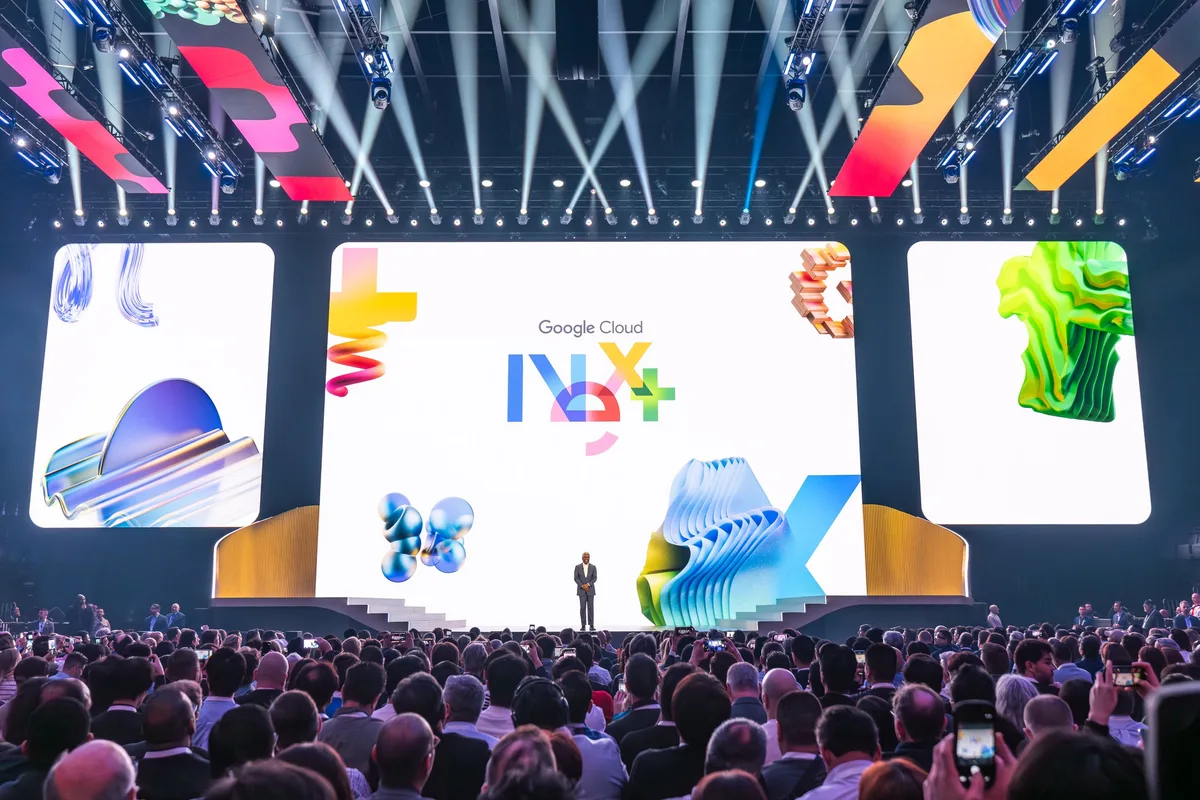
Google Cloud first published this collection at its Next conference in April 2024 as a set of 101 examples. It has been expanded twice a year since, and the April 2026 update added 301 new entries, bringing the running total to 1,302. Google organizes the list across eleven industry groups, including automotive and logistics, business and professional services, financial services, healthcare and life sciences, manufacturing, media, public sector, retail, and more.
Within each industry, the entries are further sorted into six categories of what Google calls agent types: Customer, Employee, Creative, Code, Data, and Security. That structure is useful for a business owner, because it maps roughly to the actual departments and functions most companies already have, rather than abstract AI jargon.

Google says it used its own AI tools, including Gemini, to help analyze the dataset once it grew too large to review manually, then had its team select and refine the most notable patterns. A few of the broader trends Google highlighted from the 2026 update are useful to understand even if you never read the full list:
- AI is shifting from a single assistant answering questions to a coordinated set of specialized agents that hand tasks off to each other, sometimes without a person in the loop at every step
- Businesses are using natural language tools to make old, complicated internal systems easier for regular staff to query, without needing to rebuild those systems from scratch
- Content generation tools are making it cheap to produce large volumes of personalized marketing material, video, and creative variations
- AI is increasingly being pointed at physical, real world data, like camera feeds, sensors, and photos, not just text and spreadsheets
- Security teams are moving from AI that flags problems to AI that can act automatically to contain them

Real Examples That Matter for Small and Mid-Sized Businesses
The headline names on this list are massive companies. But a meaningful number of entries come from smaller businesses and startups, and those examples tend to be more directly useful if you’re running a local business or a small team. Here’s a sample across a few categories.
Customer Facing AI
A Taiwanese electric vehicle brand called LUXGEN uses an AI agent to answer customer questions on its messaging channel, cutting the workload on its human support staff by roughly 30 percent. A small architecture firm with 25 employees uses an AI tool built into its email client to keep track of client requests across dozens of overlapping conversations, something that would otherwise require a dedicated project coordinator.
Employee Productivity
A 500-person international IT consultancy uses AI translation tools built into its everyday workspace apps to let teams across 30 countries communicate without language barriers slowing down projects. A single founder running a personal brand coaching business uses AI writing tools to draft personalized outreach emails in her own voice, saving hours she’d otherwise spend on repetitive writing.
Creative and Marketing
A Hong Kong media company built a marketing tool that generates personalized text and images for specific audience segments, which improved marketing team productivity by around a third and let clients increase their posting frequency from three posts a week to twelve. That’s the kind of gain a small marketing team or a solo business owner managing their own social presence could realistically use too.
Data and Operations
A Colombian logistics company managing more than 20 million shipments a year used AI to predict package returns and automate delivery validation, improving real time data access by 80 percent and increasing delivery success by 15 percent. Even a much smaller logistics or delivery focused business could apply the same underlying idea, using AI to flag likely problem deliveries before they happen rather than after. Entry points like the official list of real-world gen AI use cases are free to browse by industry and function.
Security
Several mid-sized financial firms in the list reported cutting the time it takes to write and deploy new security detection rules from hours or weeks down to seconds or days, using AI to draft the initial rule logic that a human then reviews. For a small business without a dedicated security team, tools built on this same idea are increasingly available as add-ons to standard business software.
A Quick Look at the Numbers
Here’s a simple breakdown of how the list has grown and what it’s organized around.
| Metric | Detail |
|---|---|
| Total use cases (as of April 2026) | 1,302 |
| Original list size (April 2024) | 101 |
| New entries added in the April 2026 update | 301 |
| Major industry groups covered | 11 |
| Agent type categories | 6 (Customer, Employee, Creative, Code, Data, Security) |
| Update frequency | Roughly twice a year since launch |
Why This Matters Even If You’ve Never Used an AI Tool for Business
It’s easy to assume lists like this are just marketing material from a company that sells AI infrastructure, and to some extent that’s true, this is a Google Cloud publication. But it’s also one of the more useful, grounded snapshots available of how AI is actually being used across real operations, rather than in demos or predictions. Google’s own wrap-up of Cloud Next 2026 shows the same themes running through the company’s broader announcements.
The pattern to pay attention to isn’t any single flashy example. It’s how consistently the same few categories keep showing up: customer questions being answered faster, employees spending less time on repetitive writing and research, marketing content being produced at a fraction of the previous cost and time, and operational data being turned into decisions faster than a person could manually process it.
None of that requires a massive budget or an in-house engineering team. Most of the tools referenced in the list are built on the same underlying AI models available through consumer and small business plans today, including product lines like Gemini Enterprise.
A Few Practical Ways to Apply This
- Start with one repetitive task your team does weekly, like drafting similar emails or summarizing meeting notes, and test an AI tool specifically for that task before trying to overhaul your whole workflow.
- Look at your own customer questions. If the same three or four questions come up constantly, that’s usually the easiest place to add an AI powered chat tool or FAQ assistant.
- Don’t assume AI tools require custom development. Many of the productivity gains described in Google’s list came from AI features already built into everyday tools like email, spreadsheets, and video calling software.
- Track the time saved on a specific task for a few weeks before deciding whether a bigger AI investment makes sense for your business.
How F9XR Team Can Help
Reading through a list like this is inspiring, but figuring out what actually applies to your specific business is a different challenge entirely. That’s true whether you’re a Chartered Accountant, Company Secretary, Cost and Management Accountant, or a local business owner.
We help businesses translate broad AI trends into practical improvements for their own website and digital presence. That includes:
- Building AI powered chat and FAQ tools into your website so customers get instant answers to common questions
- Website development and redesign that make it easier to integrate AI powered features down the line
- Local SEO management, so your business is visible both on traditional Google search and on AI search tools like ChatGPT, Gemini, and Perplexity
- Ongoing digital presence support to help you adopt the right AI tools for your size and industry, without overcomplicating your operations
If this list made you curious about what AI could realistically do for your specific business, that’s exactly the kind of conversation we have with clients regularly. A good starting point is auditing what you already have, and our monthly website audit checklist covers the AI visibility side of that process.
Key Takeaways
- Google Cloud’s list of real-world gen AI use cases has grown from 101 entries in 2024 to 1,302 as of the April 2026 update, spanning eleven industries.
- The list is organized into six agent types: Customer, Employee, Creative, Code, Data, and Security, which maps closely to functions most businesses already have.
- Many of the most useful examples for small businesses come from small and mid-sized companies, not just enterprise giants.
- Common patterns include faster customer support, reduced time on repetitive writing and research, cheaper and faster marketing content production, and quicker operational decision making.
- Most of the productivity gains described don’t require custom AI development, many come from AI features already built into everyday business tools.
- Businesses considering AI adoption should start with a single repetitive task or common customer question rather than attempting a full operational overhaul at once.
Conclusion
What makes Google’s list useful isn’t the scale of it, it’s the pattern underneath. Across 1,302 examples, the businesses seeing real results aren’t necessarily the ones with the biggest AI budgets. They’re the ones that picked one specific, repetitive problem and pointed AI directly at it.
If you’re a small business owner trying to figure out where to start with AI, or just trying to make sure your website and digital presence are keeping pace with how customers now search and interact with businesses, that’s exactly the kind of practical, right sized guidance F9XR Team provides, from website development and redesigns to local SEO and broader digital presence solutions built around what actually works for a business your size.
Produced using AI-assisted research and drafting workflows, then reviewed and edited by the F9XR editorial team. See our Editorial Policy for how we create and verify content.
Further Reading
Related Questions

Keywords
Copyright
© 2026 F9XR Team. Licensed under the Creative Commons Attribution 4.0 International License (CC BY 4.0). You are free to share and adapt this work with attribution to the F9XR Team.
Disclaimer
This article reflects the experience and opinions of the F9XR Team and is provided for general informational purposes only. It is not professional legal, financial, or medical advice. Metrics and results mentioned are illustrative and not guaranteed.
F9XR/Articles, published by the F9XR Team, delivers high-quality marketing content produced by staff and contracted experts, unless otherwise noted. This commitment to quality ensures comprehensive coverage of industry topics from a trusted team of writers. For more information, please visit the F9XR Team website or reach out through the contact page.
Ready to Build a Stronger Digital Presence?
The F9XR Team helps business owners turn websites into conversion engines. From website development and redesign to local SEO and AI-powered visibility, we engineer systems that bring in results, not just traffic.
Comments